
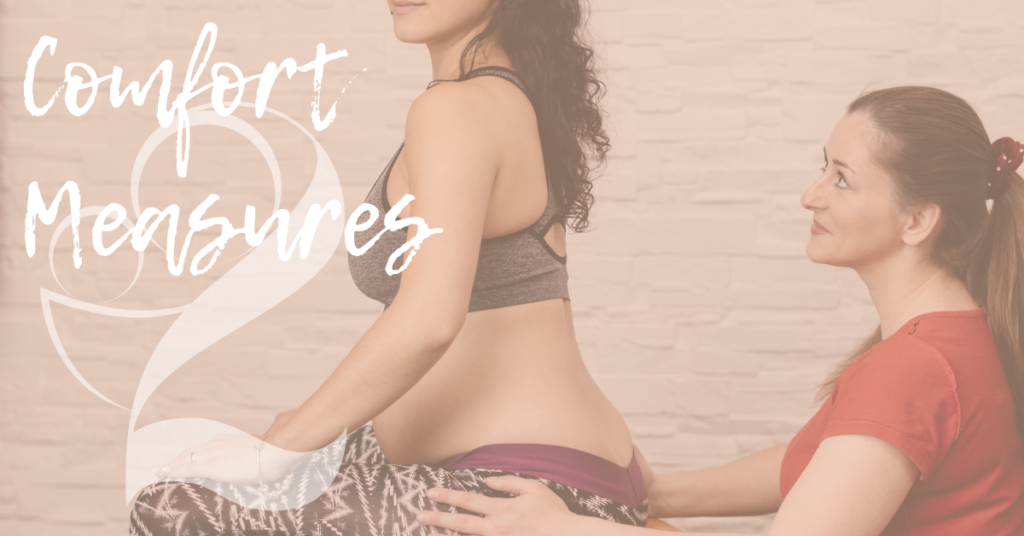
At How2Mom, we know that childbirth is both powerful and demanding. While medical pain relief has its place, there are also many non-medical comfort measures that can make a huge difference in your labor experience.
These labor comfort techniques are designed to help you relax, cope, and feel supported every step of the way. Whether you want to avoid medication altogether or simply need tools to complement your birth plan, here are 13 doula-approved strategies to bring more comfort to your birth. Want a complete picture to help you prep for labor? Check out our Comfort Measures for Labor Class! How2Mom Clients get 50% off.
1. Hire a Doula
We’ve witnessed countless birth stories, and one thing we know for sure: the numbers don’t lie. Families who choose to bring a doula onto their birth team consistently have smoother, more positive experiences—and the research backs it up.
Here’s what studies show about doula support:
- 25% decrease in the risk of cesarean (and up to 39% when a doula is present)
- 8% increase in spontaneous vaginal birth (15% with a doula)
- 10% decrease in the use of pain medications
- Labors shorter by an average of 41 minutes
- 38% decrease in babies with low Apgar scores
- 31% decrease in moms reporting dissatisfaction with their birth experience
Behind these numbers are real stories: moms who felt calmer, partners who felt supported, and babies welcomed into the world in a less stressful environment. A doula isn’t just another person in the room—they’re a steady presence who brings comfort, advocacy, and perspective when it matters most.
2. Create a Calming Atmosphere
Your environment matters. Dim lighting, music playlists, or even silence can help lower stress hormones and promote relaxation. A soothing atmosphere encourages your body to labor more effectively.
3. Massage and Touch
Massage during labor can reduce tension and redirect focus away from contractions. Whether it’s light touch, counter pressure, or simply holding hands, supportive touch helps release oxytocin—the “feel-good” hormone—promoting comfort and progress.
4. Breathing Techniques
5. Position Changes
6. Aromatherapy
Essential oils like peppermint or lemon can ease nausea, while lavender promotes calm. Check with your birth location ahead of time—many hospitals and birth centers allow you to bring your own oils for labor comfort.
Ease labor pains with our comfort measures class!
Hey, expecting parents!
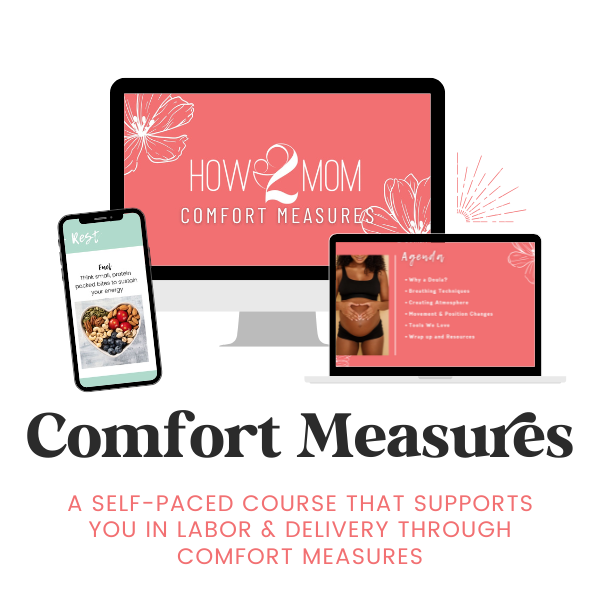
Are you looking for natural ways to manage labor discomfort? Then explore our Comfort Measures class for:
- Hands-on learning: Practice various comfort measures in a supportive environment.
- Expert guidance: Learn from experienced professionals dedicated to your well-being.
- Empowerment: Gain confidence in your ability to manage labor naturally.
Take control of your birth experience and discover effective comfort techniques. Sign up for our comfort measures for labor class today!
7. Hot and Cold Therapy
8. Keep Moving
Walking, swaying, or gentle dancing helps your baby descend and keeps contractions effective. Staying in bed for long periods may slow labor, so movement is one of the simplest but most effective comfort measures for labor.
9. Rest, Fuel, and Hydrate

10. Hydrotherapy
11. Counter Pressure and Double Hip Squeeze
Counter pressure involves steady force applied to the lower back during contractions, while the double hip squeeze eases pelvic tension. These techniques, often performed by a doula or partner, are especially helpful for back labor.
12. Labor Tools
Simple tools can provide major relief:
- Birthing ball: encourages movement and opens the pelvis
- Birthing stool: supports upright positions
- Rice packs: offer soothing heat or cold therapy
These low-tech options are staples in many birth rooms.
13. Spinning Babies Techniques
Guided positioning practices like Spinning Babies help with balance, gravity, and movement to encourage optimal fetal positioning. Some of these techniques can be practiced during pregnancy to prepare your body for labor.
Final Thoughts from How2Mom
There’s no one “right” way to labor—just the way that works for you. Comfort measures for labor are not about replacing medical care but about giving you tools to feel more in control and supported through the experience.
At How2Mom, we’re here to walk alongside you, offering doula support, education, and encouragement every step of the way.
Want personalized support in using these techniques? Connect with our doula team today and let’s talk about your birth plan. Or check out our comfort measures course here.
Other Birthing Resources:
Pin this Blog!
*Medical Disclaimer: All content and information is for informational and educational purposes only. It does not constitute medical advice and does not establish any kind of client relationship. Although we strive to provide accurate general information, the information presented here is not a substitute for any kind of professional advice, and you should not rely solely on this information. Seek advice from your medical professional.
Any/all of the links in this blog may be affiliate links of which How 2 Mom, LLC receives a small commission, without any additional cost to you. Using affiliate links help us maintain our website, continue to provide for our community, and support our families, and we are forever grateful for your support!